
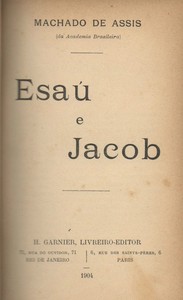
Esau e Jacob by Machado de Assis
If you're looking for a straightforward historical romance, you might want to adjust your expectations. Machado de Assis serves up something far more interesting.
The Story
The book follows the lives of identical twins, Pedro and Paulo, from birth. Despite looking exactly alike, they are opposites in temperament and belief. Their lifelong rivalry reaches its peak when they both fall desperately in love with the same woman, the gentle and thoughtful Flora. The catch? She can't choose between them, drawn to qualities in each. This personal drama unfolds against the backdrop of late 1880s Brazil, a country in the throes of upheaval, abolishing slavery and violently shifting from an Empire to a Republic. Pedro is a staunch monarchist; Paulo, a fiery republican. Their fight for Flora's heart becomes a mirror for the nation's own struggle to choose its future.
Why You Should Read It
First, Machado's voice. He narrates like a witty, slightly mischievous friend who knows how the story ends but enjoys watching you figure it out. He breaks the 'fourth wall,' chatting directly to you about the characters and their fates. This makes a story about 19th-century politics feel incredibly fresh and personal. Second, Flora. She's not a passive prize. Her inability to choose is the book's brilliant core. It's not indecision, but a profound internal conflict that reflects the confusion of a society in transition. Is she weak, or is she the only one who truly sees the value in both sides? The book doesn't give easy answers, and that's what makes it stick with you.
Final Verdict
This is a perfect book for readers who love character-driven stories with a sharp intellectual edge. If you enjoyed the psychological depth of Jane Austen but wished it had a bit more political bite and narrative mischief, this is for you. It's also a fantastic, accessible entry point into Brazilian literature and history. You don't need to know the historical details—Machado makes the human stakes crystal clear. Ultimately, Esau and Jacob is for anyone who's ever felt torn between two paths, or wondered how much of our destiny is written from the very beginning.
This text is dedicated to the public domain. You do not need permission to reproduce this work.
Emily Thomas
8 months agoI've been looking for a reliable source on this topic, and the concise summaries at the end of each section are a lifesaver. This should be on the reading list of every serious professional.
Ashley Thompson
1 year agoBefore I started my latest project, I read this and the formatting on mobile devices is surprisingly crisp and clear. This is a solid reference for both beginners and experts.
Kimberly Thompson
10 months agoI took detailed notes while reading through the chapters and the wealth of information provided exceeds the average market standard. I’ll definitely be revisiting some of these chapters again soon.
Emily Rodriguez
1 year agoGiven the current trends in this field, it addresses the common misconceptions in a very professional manner. Definitely a five-star contribution to the field.



Charles Hernandez
2 months agoA must-have for graduate-level students in this discipline.