
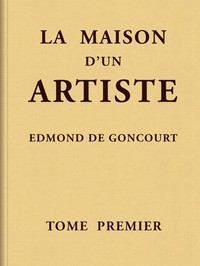
La maison d'un artiste, Tome 1 by Edmond de Goncourt
Forget what you know about novels. La Maison d'un Artiste is something else entirely. Published in 1881, it’s Edmond de Goncourt’s guided tour of his own home. The ‘story’ is the journey from the entrance hall to the private studies and salons.
The Story
There is no traditional plot. Instead, Goncourt takes us by the hand and walks us through his Parisian house, room by room, shelf by shelf. He doesn’t just describe his collection of 18th-century French art, Japanese prints, and Renaissance curiosities; he tells us where he found each piece, what it cost him (in money and in obsession), and the history it carries. The narrative thread is the physical space of the house itself. The quiet, underlying current is his profound grief for his brother and creative partner, Jules. The house becomes a monument to their shared taste and a lonely sanctuary for the surviving brother.
Why You Should Read It
This book is a revelation for anyone who believes our surroundings tell our story. Goncourt’s voice is wonderfully personal—proud, witty, sometimes fussy, and deeply sentimental. You get the thrill of the hunt as he describes tracking down a perfect piece of porcelain, and the pang of sadness when he points to an object and simply says, ‘This was my brother’s.’ It’s less about art history and more about the psychology of collecting. He shows how we build little worlds around ourselves to remember, to impress, and to make sense of our lives. Reading it feels incredibly modern, like the world’s most elegant and detailed blog post from 1881.
Final Verdict
This is not for someone looking for a fast-paced story. It’s a book to savor slowly, maybe just a room at a time. It’s perfect for lovers of interior design, history, and memoir, or anyone fascinated by how people curate their own lives. If you enjoyed the intimate details in a book like The Hare with Amber Eyes or simply love peeking into other people’s homes and minds, you’ll find Goncourt to be the most captivating host. It’s a unique, quiet masterpiece about memory, beauty, and the art of living with the past.
This work has been identified as being free of known copyright restrictions. Preserving history for future generations.
Ashley Lewis
2 years agoSimply put, the plot twists are genuinely surprising. A true masterpiece.
Edward Clark
1 year agoHaving read this twice, the atmosphere created is totally immersive. Worth every second.



Charles Brown
4 months agoIf you enjoy this genre, it manages to explain difficult concepts in plain English. Exactly what I needed.