
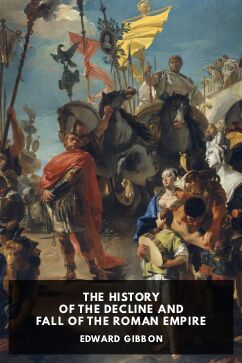
The History of the Decline and Fall of the Roman Empire - Edward Gibbon
Okay, let's be clear from the start: this isn't a novel. There's no single plot or main character. Instead, Edward Gibbon's masterpiece is the story of an empire's 1,300-year unraveling. He starts with the Roman Empire at its peak in the 2nd century AD—a vast, stable, and prosperous superpower. Then, he meticulously traces the path from that height to the final fall of Constantinople in 1453.
The Story
Think of it as a long, detailed investigation. Gibbon moves through centuries, showing how a combination of forces chipped away at Rome's foundation. He covers military overreach, where the empire stretched itself too thin. He looks at political decay, with emperors more interested in palace intrigue than good governance. He examines economic strain and social changes. A major thread is the rise of Christianity, which Gibbon argues replaced old Roman civic virtues with a focus on the afterlife, weakening the state's unity. He doesn't stop with the Western Empire's fall in 476 AD but follows the Eastern (Byzantine) Empire's long, slow decline for another thousand years.
Why You Should Read It
You read this for Gibbon's mind, not just the facts. His voice is what makes it special. He's sarcastic, elegantly dismissive of what he sees as superstition, and full of sharp observations about human nature that still ring true. When he describes a corrupt emperor or a foolish decision, you can almost hear him sigh. It’s history told with a point of view. You're not just learning what happened; you're getting into a 200-year-old argument with a brilliant guide about why it happened. It makes you think about what holds any society together and what can pull it apart.
Final Verdict
This book is a project, not a page-turner. It's perfect for patient readers who love big ideas and rich, classic prose. It's for anyone fascinated by politics, religion, and the patterns of history. If you enjoy authors like Tom Holland or podcasts that dissect the fall of empires, Gibbon is your essential, foundational text. Don't feel you have to read all six volumes at once—tackle it in chunks. It's a landmark achievement: sometimes challenging, always rewarding, and guaranteed to make you look at the news a little differently.
This publication is available for unrestricted use. Enjoy reading and sharing without restrictions.
Noah Hernandez
9 months agoThe fonts used are very comfortable for long reading sessions.
Jackson White
1 year agoFrom the very first page, the flow of the text seems very fluid. A true masterpiece.
William Williams
1 year agoThe index links actually work, which is rare!
David Thompson
1 year agoI was skeptical at first, but it manages to explain difficult concepts in plain English. Absolutely essential reading.

Ashley Garcia
6 months agoThe layout of the digital version made it easy to start immediately, the way it handles controversial points with balance is quite professional. I'm genuinely impressed by the quality of this digital edition.