
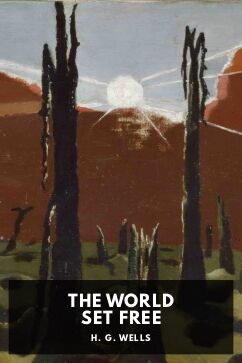
The World Set Free - H. G. Wells
H.G. Wells had a knack for seeing the future, and in The World Set Free, he stared straight into the 20th century and wrote down what he saw. Published in 1914, it feels like he had a crystal ball.
The Story
The book follows a few key people across decades. It starts with a scientist, Holsten, who cracks the secret of atomic energy. This discovery changes everything. Nations build terrible new weapons—"atomic bombs"—and a final, brutal world war breaks out. Cities are vaporized in an instant. It's a grim, vivid picture of total war. But the story doesn't end in despair. The surviving leaders, shell-shocked by what they've created, do something unprecedented. They gather and decide to form a single, global government. They take the very atomic energy that destroyed the old world and use it to power a new one—a world without borders, poverty, or war, where machines do all the hard work and people are free to create and explore.
Why You Should Read It
This book grabbed me because it’s so brutally honest about human nature. Wells shows us our genius and our self-destructive madness side-by-side. He didn't just invent the idea of the atomic bomb; he predicted the arms race, the fear of total annihilation, and even the concept of mutually assured destruction. The most powerful part is his stubborn optimism. Even after painting this nightmare, he believed we could learn, that our intelligence could win over our tribalism. The characters making the choice to unite aren't naive; they're desperate and pragmatic. They choose peace because war has finally become too stupid to consider. That argument feels incredibly relevant right now.
Final Verdict
This is a must-read for anyone interested in science fiction, history, or politics. It’s perfect for fans of classic thinkers who used stories to explore big ideas, like Orwell or Asimov. It’s not a fast-paced thriller—it’s a thoughtful, almost clinical look at a possible future. Some of the science and social details are dated, but the core questions are timeless. Are we smart enough to handle our own inventions? Can we overcome our ancient divisions? Reading Wells’s 110-year-old warning—and his hopeful blueprint for a way out—is a haunting, brilliant, and ultimately uplifting experience.
Legal analysis indicates this work is in the public domain. It serves as a testament to our shared literary heritage.
Elizabeth Perez
10 months agoMy first impression was quite positive because the attention to detail regarding the core terminology is flawless. If you want to master this topic, start right here.
Charles Smith
2 years agoSolid information without the usual fluff.
Nancy Miller
10 months agoComparing this to other titles in the same genre, the concise summaries at the end of each section are a lifesaver. This adds significant depth to my understanding of the field.
Joseph Thompson
6 months agoGiven the current trends in this field, the author doesn't just scratch the surface but goes into meaningful detail. Thanks for making such a high-quality version available.


Mary Lee
2 years agoAfter a thorough walkthrough of the table of contents, the bibliography and references suggest a high level of research and authority. I'm glad I chose this over the other alternatives.