
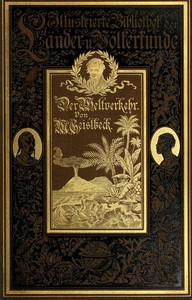
Der Weltverkehr by Michael Geistbeck
So, what exactly is Der Weltverkehr (which translates to World Traffic or World Communication)? Published in 1888, it's not a story with characters. Instead, it's a snapshot of a world on the brink of massive change. Geistbeck, a geography professor, took all the latest tech of his day—ocean liners, sprawling rail networks, the telegraph—and connected the dots. He argued that these inventions weren't just making travel faster; they were weaving the planet into a single, interactive system for the first time in history.
The Story
There's no traditional plot. Think of it as a guided tour of the late 1800s through the lens of connection. Geistbeck walks you through how goods, people, and information were starting to move. He talks about trade routes, colonial expansion, and how news could now travel across oceans in hours instead of months. The 'story' is the birth of globalization, told by someone watching it happen in real time. He describes a world where a financial crisis in London could immediately affect markets in New York, or where scientific discoveries in Berlin could be debated in Tokyo within days.
Why You Should Read It
Reading this book is a unique experience. It’s like having a conversation with a brilliantly observant person from the past. You get this eerie feeling because so much of what he describes as the future is our everyday reality. He talks about the 'annihilation of space and time,' which is exactly what the internet did. It’s humbling and exciting to see these ideas in their raw, early form. It also provides crucial context for today's debates about globalization—it reminds us this isn't a new phenomenon, but a process with deep roots.
Final Verdict
This book is a perfect match for curious minds who love history, technology, or big ideas. It’s especially great for anyone interested in how we got to our hyper-connected present. It's not a dry academic text; Geistbeck's writing is clear and filled with genuine wonder. If you enjoy books like The Victorian Internet by Tom Standage, which looks at the social impact of the telegraph, you'll appreciate this primary source. Just go in knowing it's an idea-driven analysis, not a page-turning thriller. For history buffs and futurists alike, it’s a remarkable and surprisingly relevant read from the dawn of our modern world.
No rights are reserved for this publication. Enjoy reading and sharing without restrictions.
Michelle Jackson
1 year agoFast paced, good book.
Lisa Torres
1 year agoI started reading out of curiosity and it manages to explain difficult concepts in plain English. I learned so much from this.
Patricia Sanchez
1 year agoWithout a doubt, it creates a vivid world that you simply do not want to leave. I learned so much from this.
Michael Jones
1 year agoWithout a doubt, the character development leaves a lasting impact. I will read more from this author.


Joseph Lee
1 year agoOne of the most comprehensive guides I've read this year.