
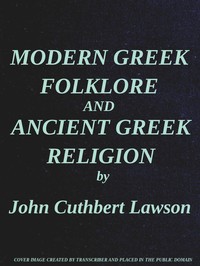
Modern Greek Folklore and Ancient Greek Religion: A Study in Survivals by Lawson
First published in 1910, J.C. Lawson's book is a unique piece of detective work. Lawson wasn't just reading old texts in a library; he was out in the field, talking to shepherds and farmers in early 20th-century Greece. He recorded their stories about vampires (the vrykolakas), water spirits, and the dreaded Gorgona. Then, he played a game of connect-the-dots across two thousand years.
The Story
There isn't a traditional plot, but there is a compelling argument. The book builds its case chapter by chapter. Lawson shows you a modern folk belief, like the fear of the Nereids (fairies) who could kidnap people near water. Then, he walks you back through time, pointing to nearly identical stories in ancient poetry and plays about nymphs. He does this with death spirits, werewolf-like creatures, and household gods. The 'story' is the surprising, persistent life of these ideas. It shows how ancient rituals to appease a harvest god might transform into a Christian saint's day festival, keeping the same core purpose but with a new name. The central thread is survival: how do the bones of a dead religion keep moving?
Why You Should Read It
This book changed how I see folklore. It’s easy to think of old myths as finished stories, locked in a book. Lawson proves they are more like seeds. Even when the official religion changed, those seeds were still in the soil—the daily lives and fears of people. They sprouted again in new forms. The chapter on the modern Gorgona is especially chilling. Lawson’s villagers described her with the same petrifying gaze as Medusa, but she had evolved into a more general monster. It makes you realize that these weren't just fancy stories for the ancients; they were explanations for the scary and unknown. That need to explain never went away, so the creatures never really left. Reading this feels like uncovering a hidden layer of history, one that's written not in stone, but in whispers and warnings passed from grandparent to child.
Final Verdict
Perfect for anyone who loves Greek mythology and wants to see its long shadow. It's also great for readers interested in how cultures remember and adapt. A word of caution: it's an old academic book, so the style can be formal in places. But push through—the ideas are incredibly accessible and thrilling. If you’ve ever visited Greece and felt the magic in its landscapes, this book gives names and deep, ancient stories to that feeling. It’s not a light beach read, but for a curious mind, it’s a captivating treasure hunt through time.
No rights are reserved for this publication. Feel free to use it for personal or commercial purposes.
Donna Gonzalez
11 months agoI didn't expect much, but the storytelling feels authentic and emotionally grounded. A valuable addition to my collection.
Betty Lewis
1 year agoCitation worthy content.
Sarah Young
7 months agoNot bad at all.