
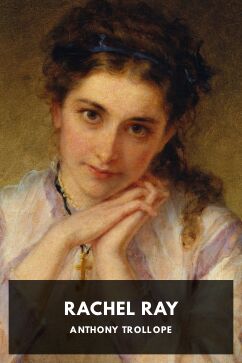
Rachel Ray - Anthony Trollope
Anthony Trollope might be a 19th-century author, but in Rachel Ray, he captures a feeling that's timeless: the suffocating warmth of a small community. This is a book about the quiet battles fought in drawing rooms and over teacups, where a raised eyebrow can be as damaging as a shouted insult.
The Story
We meet Rachel Ray, a kind and principled young woman living with her recently widowed mother and her much older, fiercely religious sister, Mrs. Prime. Rachel's life is simple and somewhat sheltered. That changes when she meets Luke Rowan, a handsome and ambitious young man who has a stake in the local brewery. They form a quick, genuine connection. But in the town of Baslehurst, a courtship is never just between two people. Luke is seen as brash and a threat to the old brewery owners. Rachel's sister, Mrs. Prime, and her evangelical vicar, Mr. Prong, see him as a worldly danger to Rachel's soul. Soon, Rachel is caught in a tug-of-war. On one side is her own heart and Luke's sincere affection. On the other is the immense pressure from her sister and the weight of community disapproval. The plot turns on whether this young couple's bond can withstand the constant scrutiny and manipulation from those who claim to know what's best for them.
Why You Should Read It
I fell for this book because of its incredible humanity. Trollope doesn't paint villains in black and white. Mrs. Prime is overbearing, but you understand her fear for Rachel's spiritual welfare. The gossiping townsfolk are annoying, but they're also a realistic portrait of how communities function. Rachel herself is wonderful—she's not a fiery rebel, but a gently strong person trying to think for herself. Her internal conflict feels real and relatable. The book is also quietly funny, poking gentle fun at hypocrisy and self-importance. It’s a masterclass in how the smallest social interactions can carry enormous emotional weight.
Final Verdict
This book is perfect for readers who love character-driven stories and the intricate drama of social novels like Jane Austen's, but who want a slightly less formal, more grounded feel. If you enjoy stories where the biggest explosions happen in conversation, not on battlefields, you'll love it. It's also a great, accessible entry point into classic literature. You don't need a history degree to understand Rachel's dilemma—the pressure to conform is something we all face. So, brew a cup of tea, settle in, and prepare to get wonderfully frustrated on Rachel's behalf as she fights for her own happy ending.
This digital edition is based on a public domain text. Thank you for supporting open literature.
Logan Smith
1 year agoThis is one of those stories where the emotional weight of the story is balanced perfectly. A true masterpiece.
Mary Jones
11 months agoLoved it.
Anthony Allen
1 year agoI came across this while browsing and the character development leaves a lasting impact. A valuable addition to my collection.
Mason Hill
1 year agoPerfect.

Elizabeth Gonzalez
1 year agoHaving read this twice, the plot twists are genuinely surprising. Exactly what I needed.