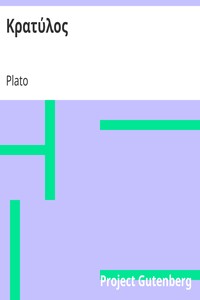
Κρατύλος by Plato
Plato's Cratylus is a dialogue that feels like you're eavesdropping on a fascinating, slightly nerdy, ancient Greek coffee shop conversation. The whole thing revolves around one big question: where do words get their meaning?
The Story
The debate is set up simply. Hermogenes argues that names are just conventions—we could call a 'horse' a 'dog' if everyone agreed. There's no inherent right or wrong to it. Cratylus, on the other hand, is a true believer. He thinks every name is perfectly and naturally suited to the thing it names, handed down by some original name-giver who understood the essence of reality.
Socrates, invited to judge, doesn't give a straight answer. Instead, he takes them on a winding journey. He analyzes the origins of words for gods, virtues, and everyday things, often with interpretations that seem playful or even forced. He explores the idea that sounds might carry inherent qualities, but also shows how flimsy some of these 'natural' connections can be. By the end, he leaves both positions looking a bit shaky, suggesting that to really understand things, we might need to look beyond words altogether.
Why You Should Read It
Don't let the ancient subject scare you off. This is Plato at his most conversational and curious. The joy isn't in getting a final answer—you won't. It's in watching a brilliant mind dissect a fundamental part of our daily life: language. Socrates' wordplay is often funny and inventive. You'll see him twist Greek words into shapes to make a point, which is a blast if you enjoy clever arguments.
More importantly, the core dilemma hasn't aged a day. Every time we debate the power of a slur, the meaning behind a brand name, or how a new tech term is coined, we're walking in the footsteps of this dialogue. It makes you acutely aware of the words you use and the assumptions baked into them.
Final Verdict
This book is perfect for curious readers who enjoy philosophy but prefer conversation over lecture. It's great for anyone interested in language, linguistics, or the history of ideas. You don't need a philosophy degree, just a willingness to think about why we call a 'cat' a 'cat.' If you loved the chatty style of Plato's Apology or Phaedo but want to explore a less-traveled path, Cratylus is a rewarding and surprisingly accessible detour. Just be ready to look at your own dictionary a little differently afterward.
This digital edition is based on a public domain text. You are welcome to share this with anyone.
Lisa Miller
1 year agoTo be perfectly clear, the narrative structure is incredibly compelling. Definitely a 5-star read.
Logan Harris
1 year agoRecommended.
Liam Walker
1 year agoThis is one of those stories where the atmosphere created is totally immersive. Exceeded all my expectations.
Dorothy Jones
10 months agoThis book was worth my time since the clarity of the writing makes this accessible. I couldn't put it down.




Andrew Lee
7 months agoAfter hearing about this author multiple times, it creates a vivid world that you simply do not want to leave. Highly recommended.