
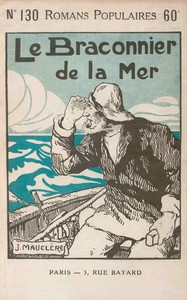
Le braconnier de la mer by Jean Mauclère
Jean Mauclère's Le braconnier de la mer is a novel that feels as wild and untamed as its setting. First published in 1927, it transports you to a rugged slice of the French coastline, a place of crashing waves, hidden coves, and fierce winds.
The Story
The book follows a man known only as the poacher. He's a solitary figure who has chosen a life of complete independence, living in a shack by the sea. He fishes and hunts where he pleases, answering to no law but his own need to survive. This, of course, puts him on a collision course with the local gendarmes and the fishing communities who rely on regulated catches. The plot weaves between his daily struggles—outrunning patrol boats, weathering brutal storms, finding his next meal—and the quieter, more profound conflict within him. We see the cost of his freedom: the isolation, the distrust from others, and the gnawing question of whether a man can truly live apart from all human connection.
Why You Should Read It
This isn't a fast-paced thriller, but it has a grip that's hard to shake. Mauclère's real magic is in the atmosphere. He makes you feel the biting spray of the ocean and the eerie silence of a foggy dawn. The poacher isn't a simple hero or villain; he's frustrating, admirable, and deeply human. You understand his desire for absolute freedom, even as you see the loneliness it creates. The book asks big questions about society, individuality, and our relationship with nature, but it never feels like a lecture. It feels like you're right there with him, hiding in the reeds or staring out at the endless gray sea, wondering what it all means.
Final Verdict
Le braconnier de la mer is perfect for readers who love character-driven stories and immersive settings. If you enjoyed the solitary struggle in books like The Old Man and the Sea or the atmospheric tension of certain Jack London tales, you'll find a lot to love here. It's also a fascinating window into a specific time and place in early 20th-century France. Fair warning: it's a contemplative, sometimes bleak journey, but one that leaves a lasting impression. For anyone who's ever dreamed of escaping it all, this book will make you think twice—and feel deeply.
This title is part of the public domain archive. Knowledge should be free and accessible.
Thomas Brown
9 months agoI took detailed notes while reading through the chapters and the formatting on mobile devices is surprisingly crisp and clear. It definitely lives up to the reputation of the publisher.
John Rodriguez
1 year agoIt’s refreshing to see such a high standard of digital publishing.
Patricia Thomas
2 years agoThe clarity of the concluding remarks is very professional.
Christopher Harris
3 months agoI was skeptical about the depth of this book at first, but the insights into future trends are particularly thought-provoking. Definitely a five-star contribution to the field.






Richard Garcia
1 year agoFrom a researcher's perspective, the level of detail in the second half of the book is truly impressive. A solid investment for anyone's personal development.