
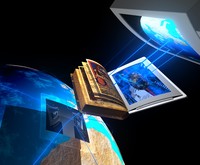
The Civilization of Illiteracy by Mihai Nadin
Okay, let's break this down. The Civilization of Illiteracy isn't a novel with a plot. Think of it as a big, provocative argument about our moment in history. Nadin's core idea is that for centuries, Western civilization was built on literacy—the written word, linear logic, and deep, sustained focus. This shaped everything from science to law to our sense of self.
The Story
The 'story' is the transition away from that world. Nadin argues that digital technology (computers, the internet, multimedia) isn't just a new tool for literate people. It's the foundation of a different kind of civilization. This new world prioritizes images, instant interaction, networking, and parallel processing of information over slow, sequential reading. He calls this the 'civilization of illiteracy,' not because people can't read, but because the core skills and ways of thinking required to thrive are fundamentally different. The book maps out what we're gaining with this incredible connectivity and what we might be leaving behind.
Why You Should Read It
I picked this up because I felt it. That mental whiplash between reading a physical book and scrolling through a feed. Nadin gave me a vocabulary for that feeling. He's not just complaining about screens; he's analyzing a seismic cultural shift. His perspective helped me understand modern politics, education debates, and even why art and advertising look the way they do now. It made me more conscious of my own brain's adaptation to this new environment. It's not a comfortable read—it will challenge your assumptions—but it's incredibly clarifying.
Final Verdict
This is for the curious reader who looks at the world and asks 'why is it like this now?' It's perfect for anyone in tech, education, media, or the arts who wants to understand the deeper currents beneath our digital lives. If you enjoyed the big-picture thinking of writers like Neil Postman (Amusing Ourselves to Death) or Yuval Noah Harari, but want a deep dive focused specifically on the cognitive and cultural impact of technology, this is your next read. Be prepared: it's dense and philosophical, but the insights stick with you for years.
This title is part of the public domain archive. It is available for public use and education.
Sandra Johnson
10 months agoI didn't expect much, but it creates a vivid world that you simply do not want to leave. Definitely a 5-star read.
William Wilson
1 year agoCompatible with my e-reader, thanks.
George Lopez
8 months agoVery interesting perspective.
Jackson Taylor
2 years agoSimply put, the flow of the text seems very fluid. I learned so much from this.







Edward Lopez
2 years agoGood quality content.